West Wales (Welsh: Gorllewin Cymru) is a region of Wales. There are several definitions on what comprises the region, including one historically comprised the Welsh principality of Deheubarth and another including Swansea and Neath Port Talbot, but excluding parts of South West Wales. The West Wales and the Valleys' NUTS[a] area also includes more westerly parts of North Wales and the South Wales Valleys. The preserved county of Dyfed covers what is generally considered to be West Wales; between 1974 and 1996; it was a county, with a county council and six district councils.
Definitions
There are several definitions of "West Wales":
- Pembrokeshire, Carmarthenshire and Ceredigion: this historically comprised the Welsh principality of Deheubarth[1]: 87, 95 This is also the area covered by the West Wales Regional Partnership Board, comprising councils, health sectors and NHS Wales, on matters relating to the area covered by Hywel Dda University Health Board.[2][3]
- Pembrokeshire, Carmarthenshire, Neath Port Talbot and Swansea; this is used by Visit Wales,[4][5] and covers a similar area as South West Wales, excluding Ceredigion.[6][7]
- Pembrokeshire and Carmarthenshire (excluding Llanelli): this used by the Welsh Development Agency before the mid 1990s.[8]
- Pembrokeshire, Carmarthenshire, Swansea, Neath Port Talbot and Bridgend County Borough: this has been used by the Welsh Development Agency from the mid-1990s.[8]
There is also a West Wales and the Valleys NUTS[b] statistical region.[9] This includes South West Wales, Mid and West Wales or Mid and South West Wales, and North West Wales.
Historic use
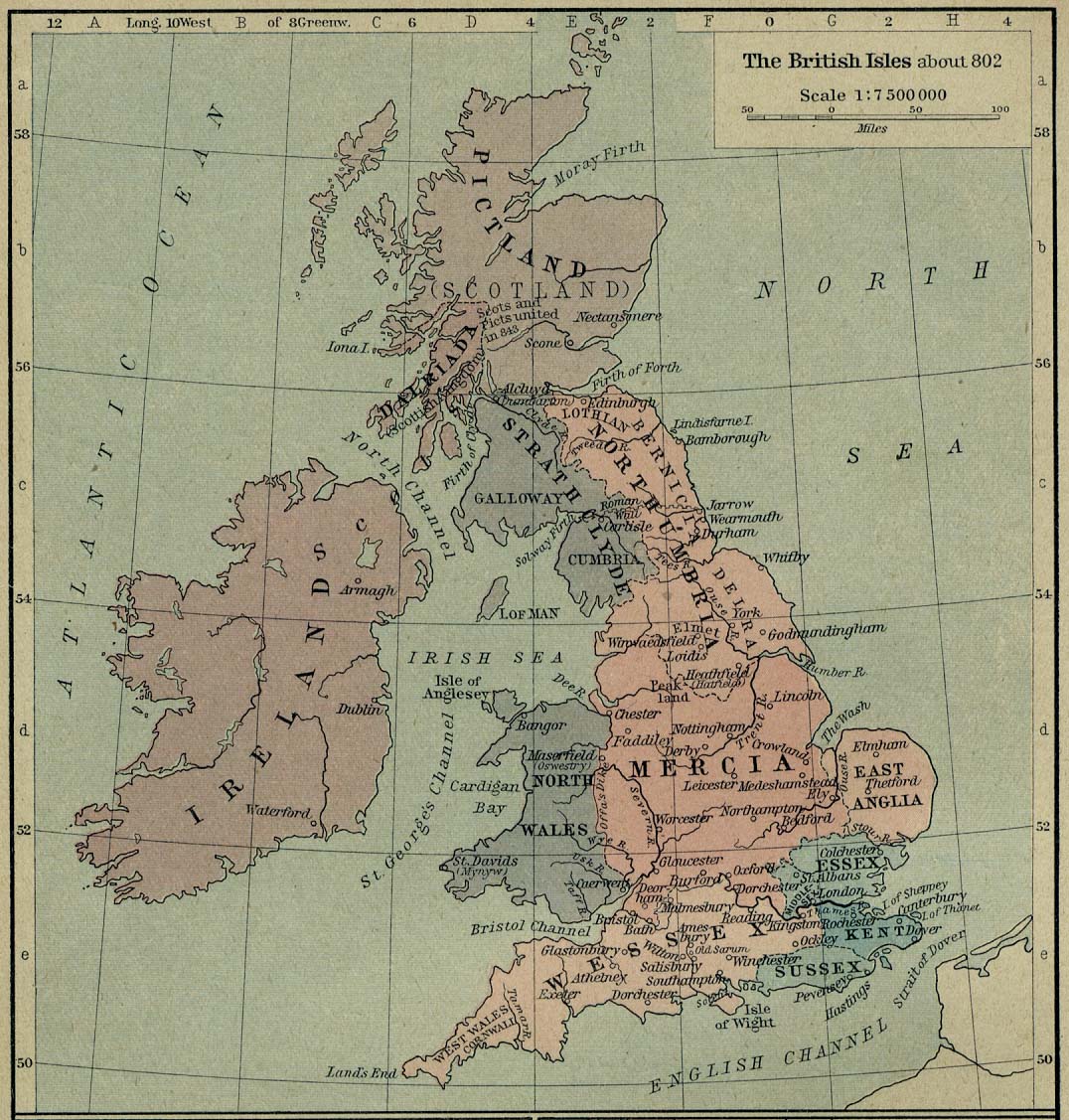
The term West Wales was applied to the Kingdom of Cornwall during the Anglo-Saxon invasion of Britain and the period of the Heptarchy.[10] The Old English word Wealas, a Germanic term for inhabitants of the Western Roman Empire which the Anglo-Saxons came to apply especially to the Britons, gave its name to Wales and is also the origin of the second syllable in the name Cornwall.
Main settlements
The main cities and towns commonly included in the term ‘'West Wales'’ are:
and sometimes:
Railways
See also
Notes
- ↑ This stands for Nomenclature of Territorial Units for Statistics. The acronym is derived from the French: Nomenclature des Unités Territoriales Statistiques.
- ↑ Now the International Territorial Level.
References
- ↑ Davies, John (1994). A History of Wales. Penguin History. ISBN 978-0-14-014581-6.
- ↑ "West Wales Area Plan". Ceredigion.gov.uk. Retrieved 30 March 2024.
- ↑ "West Wales Regional Partnership Board". Wwrpb.org.uk. Retrieved 30 March 2024.
- ↑ "Introduction to Wales". VisitWales.com. Retrieved 6 December 2021.
- ↑ "Destinations". VisitWales.com. Retrieved 5 December 2021.
- ↑ "West Wales Chamber of Commerce". Wwcc.co.uk.
- ↑ "Future Skills Wales Project Summary Report for West Wales 1998-2007" (PDF). Learningobservatory.com.
- 1 2 Phelps, Nick; Morgan, Kevin; Fuller, Crispian (2000), "Regions, Governance and FDI: The Case of Wales", in Hood, Neil; Young, Stephen (eds.), The Globalization of Multinational Enterprise Activity and Economic Development, London: Palgrave Macmillan UK, pp. 366–389, doi:10.1057/9780230599161_15, ISBN 978-0-230-59916-1, retrieved 17 December 2021
- ↑ "NUTS guide to Wales statistical groupings". Office of National Statistics.
- ↑ Shepherd, William R. (1926). "The Historical Atlas". Lib.utexas.edu.
52°26′02″N 4°16′30″W / 52.434°N 4.275°W
| Statistical |
| ||||||||
|---|---|---|---|---|---|---|---|---|---|
| Geographical |
| ||||||||
| Historical |
| ||||||||
| Local governance |
| ||||||||
| Other | |||||||||