The Theatre Portal

Theatre or theater is a collaborative form of performing art that uses live performers, usually actors, to present experiences of a real or imagined event before a live audience in a specific place, often a stage. The performers may communicate this experience to the audience through combinations of gesture, speech, song, music, and dance.
Modern Western theatre comes, in large measure, from the theatre of ancient Greece, from which it borrows technical terminology, classification into genres, and many of its themes, stock characters, and plot elements. Theatre artist Patrice Pavis defines theatricality, theatrical language, stage writing and the specificity of theatre as synonymous expressions that differentiate theatre from the other performing arts, literature and the arts in general. (Full article...)
Featured article

Featured pictures
-
 Final scene of Götterdämmerung, by Max Brückner and Otto Henning (restored by Adam Cuerden) (from Wikipedia:Featured pictures/Culture, entertainment, and lifestyle/Theatre)
 -
 Gaston at Jérusalem, by Alexandre Lacauchie (restored by Adam Cuerden) (from Wikipedia:Featured pictures/Culture, entertainment, and lifestyle/Theatre)
 -
 Don César de Bazan poster, by Célestin Nanteuil (restored by Adam Cuerden) (from Wikipedia:Featured pictures/Culture, entertainment, and lifestyle/Theatre)
 -
 Ira Aldridge, by William Paine of Islington (edited by Adam Cuerden) (from Wikipedia:Featured pictures/Culture, entertainment, and lifestyle/Theatre)
 -
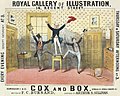 Cox and Box poster, by Alfred Concanen (restored by Adam Cuerden) (from Wikipedia:Featured pictures/Culture, entertainment, and lifestyle/Theatre)
 -
 Il trovatore poster, by Luigi Morgari (restored by Adam Cuerden) (from Wikipedia:Featured pictures/Culture, entertainment, and lifestyle/Theatre)
 -
 Macbeth, by W.J. Morgan & Co (edited by Adam Cuerden) (from Wikipedia:Featured pictures/Culture, entertainment, and lifestyle/Theatre)
 -
 The Colosseum in Rome, Italy (photo by David Iliff) (from Portal:Theatre/Additional featured pictures)
 -
 Ivor Novello, by the Bain News Service (restored by Adam Cuerden) (from Portal:Theatre/Additional featured pictures)
 -
 Set design for Act II of Haydée, ou Le secret, by Philippe Chaperon (restored by Adam Cuerden) (from Wikipedia:Featured pictures/Culture, entertainment, and lifestyle/Theatre)
 -
 Hamlet, by W.J. Morgan & Co. Lith. of Cleveland, Ohio. (edited by Adam Cuerden) (from Wikipedia:Featured pictures/Culture, entertainment, and lifestyle/Theatre)
 -
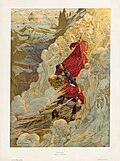 Illustration for the première of Fervaal, by Carlos Schwabe (restored by Adam Cuerden) (from Wikipedia:Featured pictures/Culture, entertainment, and lifestyle/Theatre)
 -
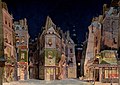 Set design for Act 2 of La bohème, by Adolfo Hohenstein (restored by Adam Cuerden) (from Wikipedia:Featured pictures/Culture, entertainment, and lifestyle/Theatre)
 -
 Set design for Act 1 of Aida, by Philippe Chaperon (restored by Adam Cuerden) (from Wikipedia:Featured pictures/Culture, entertainment, and lifestyle/Theatre)
 -
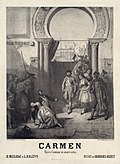 Carmen poster, by Prudent-Louis Leray (restored by Adam Cuerden) (from Wikipedia:Featured pictures/Culture, entertainment, and lifestyle/Theatre)
 -
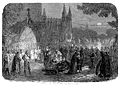 King John, author unknown (edited by Adam Cuerden) (from Wikipedia:Featured pictures/Culture, entertainment, and lifestyle/Theatre)
 -
 Donald Pleasence, by Allan Warren (edited by Christoph Braun) (from Portal:Theatre/Additional featured pictures)
 -
 The Fortune Teller poster, by the U.S. Lithograph Co. (restored by Adam Cuerden) (from Wikipedia:Featured pictures/Culture, entertainment, and lifestyle/Theatre)
 -
 Vocal score title page of Béatrice et Bénédict, by Antoine Barbizet (restored by Adam Cuerden) (from Wikipedia:Featured pictures/Culture, entertainment, and lifestyle/Theatre)
 -
 Scene V of Nina, by Jean-François Janinet (restored by Adam Cuerden) (from Wikipedia:Featured pictures/Culture, entertainment, and lifestyle/Theatre)
 -
 Thérèse poster, author unknown (restored by Adam Cuerden) (from Wikipedia:Featured pictures/Culture, entertainment, and lifestyle/Theatre)
 -
 George IV greeting Gioachino Rossini, by Charles Motte (restored by Adam Cuerden) (from Wikipedia:Featured pictures/Culture, entertainment, and lifestyle/Theatre)
 -
 French stage actress Sarah Bernhardt as Hamlet in 1899 (photo by Lafayette Photo, London) (from Portal:Theatre/Additional featured pictures)
 -
 The Magistrate poster, by Clement-Smith & Co. (restored by Adam Cuerden) (from Wikipedia:Featured pictures/Culture, entertainment, and lifestyle/Theatre)
 -
 Gilbert and Sullivan with Richard D'Oyly Carte, in a sketch by Alfred Bryan for The Entr'acte (from Portal:Theatre/Additional featured pictures)
 -
 Set design for Act 2 of Les Burgraves, by Humanité René Philastre and Charles-Antoine Cambon (restored by Adam Cuerden) (from Wikipedia:Featured pictures/Culture, entertainment, and lifestyle/Theatre)
 -
 Caricature of Gioachino Rossini, by Paul Delaroche (restored by Adam Cuerden) (from Wikipedia:Featured pictures/Culture, entertainment, and lifestyle/Theatre)
 -
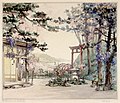 Set design for Act I of Madama Butterfly, by Alexandre Bailly and Marcel Jambon (restored by Adam Cuerden) (from Wikipedia:Featured pictures/Culture, entertainment, and lifestyle/Theatre)
 -
 Vocal score cover of La Prise de Troie at Les Troyens, by Antoine Barbizet (restored by Adam Cuerden) (from Wikipedia:Featured pictures/Culture, entertainment, and lifestyle/Theatre)
 -

-
 Set design for Act 3 of La Esmeralda, by Charles-Antoine Cambon (restored by Adam Cuerden) (from Wikipedia:Featured pictures/Culture, entertainment, and lifestyle/Theatre)
 -
 Lord Babberley crossdressing as the fake Charley's Aunt, by Thomas Charles Turner (restored by Adam Cuerden) (from Wikipedia:Featured pictures/Culture, entertainment, and lifestyle/Theatre)
 -
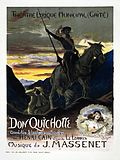 Don Quichotte poster, by Georges Rochegrosse (restored by Adam Cuerden) (from Wikipedia:Featured pictures/Culture, entertainment, and lifestyle/Theatre)
 -
 Simon Boccanegra cover, author unknown (restored by Adam Cuerden) (from Wikipedia:Featured pictures/Culture, entertainment, and lifestyle/Theatre)
 -
 Vocal score cover of Rigoletto, by Roberto Focosi and Francesco Corbetta (restored by Adam Cuerden) (from Wikipedia:Featured pictures/Culture, entertainment, and lifestyle/Theatre)
 -
 The High Rollers Extravaganza Co. at Burlesque, by Courier Company (from Wikipedia:Featured pictures/Culture, entertainment, and lifestyle/Theatre)
 -
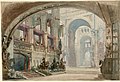 Set design for Act 3 of Robert Bruce, by Charles-Antoine Cambon (restored by Adam Cuerden) (from Wikipedia:Featured pictures/Culture, entertainment, and lifestyle/Theatre)
 -
 Title page of Giovanna d'Arco, by Luigi Barinetti (restored by Adam Cuerden) (from Wikipedia:Featured pictures/Culture, entertainment, and lifestyle/Theatre)
 -
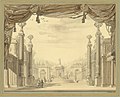 Set design for Act 3 of Alceste, by François-Joseph Bélanger (restored by Adam Cuerden) (from Wikipedia:Featured pictures/Culture, entertainment, and lifestyle/Theatre)
 -
 Othello theatrical poster, by the W.J. Morgan & Co. (from Wikipedia:Featured pictures/Culture, entertainment, and lifestyle/Theatre)
 -
 Engaged poster, by H.A. Thomas Lith. Studio (restored by Adam Cuerden) (from Wikipedia:Featured pictures/Culture, entertainment, and lifestyle/Theatre)
 -
 Burlesque, by H.C. Miner Litho. Co. (edited by Durova) (from Wikipedia:Featured pictures/Culture, entertainment, and lifestyle/Theatre)
 -
 Pénélope poster, by Georges Rochegrosse (restored by Adam Cuerden) (from Wikipedia:Featured pictures/Culture, entertainment, and lifestyle/Theatre)
 -
 Advertisement for the music score of La bohème, by Adolfo Hohenstein (restored by Adam Cuerden) (from Wikipedia:Featured pictures/Culture, entertainment, and lifestyle/Theatre)
 -
 Charlton Heston, by Rowland Scherman (edited by Nehrams2020) (from Portal:Theatre/Additional featured pictures)
 -
 Set design for Gustave III, by Pierre-Luc-Charles Cicéri (restored by Adam Cuerden) (from Wikipedia:Featured pictures/Culture, entertainment, and lifestyle/Theatre)
 -
 Queen Amahelli in Bacchus, by Paul Nadar (restored by Adam Cuerden) (from Wikipedia:Featured pictures/Culture, entertainment, and lifestyle/Theatre)
 -
 The Lucky Star poster, by Dudley Hardy (restored by Adam Cuerden) (from Wikipedia:Featured pictures/Culture, entertainment, and lifestyle/Theatre)
 -
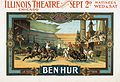 Ben-Hur poster, by Strobridge & Co. Lith. (restored by Adam Cuerden) (from Wikipedia:Featured pictures/Culture, entertainment, and lifestyle/Theatre)
 -
 Bégearss from The Guilty Mother, by Émile Bayard (restored by Adam Cuerden) (from Wikipedia:Featured pictures/Culture, entertainment, and lifestyle/Theatre)


In this month

- July 1996 – First International Festival of Ancient Greek Drama held in Cyprus
- 9 July 1991 – Premier of Ariel Dorfman's Death and the Maiden, which describes the encounter of a former torture victim with the man she believed tortured her
- 13 July 1934 – Birth of Wole Soyinka, considered Africa's most distinguished playwright and the first African to win the Nobel Prize in Literature
- 17 July 1951 – Original Abbey Theatre burned down, the first state-subsidized theatre in the English-speaking world
Featured biography

Did you know (auto-generated) -

- ... that the Palace Theater light bulb has been running since 1908?
- ... that the Missoula Children's Theatre works with more than 65,000 children every year?
- ... that after seeing a film at the United Palace, the televangelist Reverend Ike asked to buy the theater so he could move in the next day?
- ... that although only one member was fluent in English, the cast of The Mongol Khan learned the entire script before the play's West End run?
- ... that Althea Hunt founded the William & Mary Theatre, but discouraged students from trying to make a career of it?
- ... that musical theatre actress Josephine Hall became famous for performing a song that she purposefully sang high and off-key?
Selected quote

Related portals


WikiProjects
- Main project

- Descendant projects
- Sister projects
More did you know

- ...that Academy Award-winning American singer Barbra Streisand (pictured) filled in a tooth gap with Aspergum when she started out in theater?
- ...that the 1983 rock and roll comedy film Get Crazy was a tribute to the famed Fillmore East theater, where film director Allan Arkush once worked as an usher?
- ...that Nikita Balieff, a vaudeville performer, writer, impresario, and director, named his theater "Chauve-Souris" (bat) after a bat flew up out of the basement door and landed on his hat?
Topics
| History | |||||||||||
|---|---|---|---|---|---|---|---|---|---|---|---|
| Types | |||||||||||
| Regions | |||||||||||
| Stagecraft / Scenography | |||||||||||
| Personnel |
| ||||||||||

Recognized content
Extended content
|
|---|
 Featured articles
Featured lists
Good articles
Featured pictures
Featured portalsFeatured topicsGood topics
|


Categories

Things you can do

|
|

A list of articles needing cleanup associated with this project is available. See also the tool's wiki page and the index of WikiProjects.
Associated Wikimedia
The following Wikimedia Foundation sister projects provide more on this subject:
-
 Commons
Free media repository -
 Wikidata
Free knowledge base -
 Wikiquote
Collection of quotations -
 Wikisource
Free-content library -
 Wikiversity
Free learning tools -
 Wiktionary
Dictionary and thesaurus


