| Main page | Categories & Main topics |
|
Tasks and Projects |
The Aviation Portal

Aviation includes the activities surrounding mechanical flight and the aircraft industry. Aircraft include fixed-wing and rotary-wing types, morphable wings, wing-less lifting bodies, as well as lighter-than-air aircraft such as hot air balloons and airships.
Aviation began in the 18th century with the development of the hot air balloon, an apparatus capable of atmospheric displacement through buoyancy. Clément Ader built the "Ader Éole" in France and made an uncontrolled, powered hop in 1890. This was the first powered aircraft, although it did not achieve controlled flight. Some of the most significant advancements in aviation technology came with the controlled gliding flying of Otto Lilienthal in 1896. A major leap followed with the construction of the Wright Flyer, the first powered airplane by the Wright brothers in the early 1900s.
Since that time, aviation has been technologically revolutionized by the introduction of the jet engine which enabled aviation to become a major form of transport throughout the world. In 2024, there were 9.5 billion passengers worldwide according to the ICAO. As of 2018, estimates suggest that 11% of the world's population traveled by air, with up to 4% taking international flights. (Full article...)
Selected article

Selected image

Did you know
...that on October 5, 1914, a French Voisin III pilot scored the first air-to-air kill of World War I?

...that the Battle of Britain Memorial Flight contains the world's oldest airworthy survivor of the Battle of Britain, alongside ten other historic aircraft - two of which fought over Normandy on D-Day? ... that the loss of nine military crew members and passengers when Buffalo 461 was shot down over Syria in 1974, remains the largest single-incident loss of life in Canadian peacekeeping history?
General images -
-
 Jean-Marie Le Bris and his flying machine, Albatros II, 1868 (from History of aviation)
 -
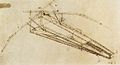
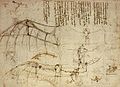 One of Leonardo's sketches (from History of aviation)
 -
 La France flying in 1885 (from History of aviation)
 -
-
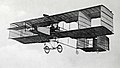 Early Voisin biplane (from History of aviation)
 -
-
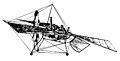
-
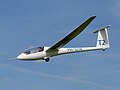
-
 The Biot-Massia glider, restored and on display in the Musee de l'Air (from History of aviation)
 -
 A Boeing 777X. It is under testing and will be the largest twinjet, with the widest and longest fuselage to enter production. (from Wide-body aircraft)
 -
-
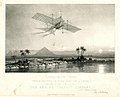 1843 artist's impression of John Stringfellow's plane Ariel flying over the Nile (from History of aviation)
 -
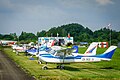
-
 Alberto Santos-Dumont flying the Demoiselle over Paris (from History of aviation)
 -

-
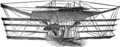 Maxim's flying machine (from History of aviation)
 -
 French reconnaissance balloon L'Intrépide of 1796, the oldest existing flying device, in the Heeresgeschichtliches Museum, Vienna (from History of aviation)
 -
 "Map of Air Routes and Landing Places in Great Britain, as temporarily arranged by the Air Ministry for civilian flying", published in 1919, showing Hounslow, near London, as the hub (from History of aviation)
 -
 An Airbus A380 of Qantas. The A380 is the world's largest passenger airliner. (from Wide-body aircraft)
 -
 Map of record breaking flights of the 1920s (from History of aviation)
 -
-

-
 Apollo 11 lifts off on its mission to land a man on the Moon (from History of aviation)
 -
 Me 262, world first operational jet fighter (from History of aviation)
 -
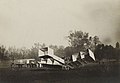 The 14-bis, or Oiseau de proie (from History of aviation)
 -
 "Governable parachute" design of 1852 (from History of aviation)
 -
 Planophore model aeroplane by Alphonse Pénaud, 1871 (from History of aviation)
 -
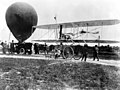 The Wright Military Flyer aboard a wagon in 1908 (from History of aviation)
 -

-
 Experimental helicopter by Enrico Forlanini (1877), exposed at the Museo nazionale della scienza e della tecnologia Leonardo da Vinci of Milan, Italy (from History of aviation)
 -
 Clément Ader Avion III (1897 photograph) (from History of aviation)
 -

-
 Otto Lilienthal, 29 May 1895 (from History of aviation)
 -
 Often published as a photo of Santos-Dumont during the prize-winning flight, this is actually an earlier attempt using his "Number 5" (from History of aviation)
 -
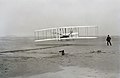 The Wright Flyer: the first sustained flight with a powered, controlled aircraft (from History of aviation)
 -
 Flagg biplane from 1933 (from History of aviation)
 -
 D.H. Comet, the world's first jet airliner. As in this picture, it also saw RAF service (from History of aviation)
 -
 The Aeroplane of Victor Tatin, 1879. (from History of aviation)
 -
 1928 issue of Popular Aviation (now Flying magazine), which became the largest aviation magazine with a circulation of 100,000. (from History of aviation)
 -
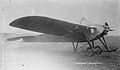 Nieuport IV, operated by most of the world's air forces before WW1 for reconnaissance and bombing, including during the Italian-Turkish war (from History of aviation)
 -
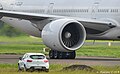
-
 First failure of Langley's manned Aerodrome on the Potomac River, 7 October 1903 (from History of aviation)
 -
 Woodcut print of a kite from John Bate's 1635 book The Mysteryes of Nature and Art (from History of aviation)
 -

-
 Concorde, G-BOAB, in storage at London Heathrow Airport following the end of all Concorde flying. This aircraft flew for 22,296 hours between its first flight in 1976 and final flight in 2000 (from History of aviation)
 -
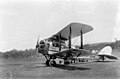 Qantas De Havilland biplane, c. 1930 (from History of aviation)
 -
 An Airbus A321 of Vietravel Airlines parking next to a Vietnam Airlines Airbus A350-900 and a Cargolux Boeing 747-400 widebodies, highlighting their size differences. (from Wide-body aircraft)


Aviation news
- 7 July 2026 – K2 Airways Flight 1732
- A K2 Airways Boeing 737-400 cargo aircraft goes missing off the coast of Pakistan with five people on board. (The Independent)
- 30 June 2026 –
- Scandinavian Airlines signs an order to purchase more than 40 Airbus A330-900neo aircraft, the largest investment in the company's history. (AA)
- 29 June 2026 – Search for Malaysia Airlines Flight 370
- Malaysia extends the search for Malaysia Airlines Flight 370, which disappeared in 2014 with 239 people aboard, until June 30, 2027, under a contingent fee agreement with Ocean Infinity. (AFP via NDTV) (Reuters)
- 27 June 2026 – Russo-Ukrainian war
- Aviation shootdowns and accidents during the Russo-Ukrainian war
- 26 June 2026 –
- A small plane crashes into the China Zun skyscraper in Beijing, China, killing the pilot and injuring 13 others. (AP) (The New York Times)
Related portals

Associated Wikimedia
The following Wikimedia Foundation sister projects provide more on this subject:
-
 Commons
Free media repository -
 Wikidata
Free knowledge base -
 Wikiquote
Collection of quotations -
 Wikisource
Free-content library -
 Wikiversity
Free learning tools -
 Wikivoyage
Free travel guide -
 Wiktionary
Dictionary and thesaurus


Selected biography

The Reverend John Flynn (25 November 1880 – 5 May 1951) was an Australian Presbyterian minister and aviator who founded the Royal Flying Doctor Service, the world's first air ambulance.
Throughout his ministerial training, Flynn had worked in various then-remote areas through Victoria and South Australia. As well as tending to matters spiritual, Flynn quickly established the need for medical care for residents of the vast Australian outback, and established a number of bush hospitals. By 1917, Flynn was already considering the possibility of new technology, such as radio and the aeroplane, to assist in providing a more useful acute medical service, and then received a letter from an Australian pilot serving in World War I, Clifford Peel, who had heard of Flynn's speculations and outlined the capabilities and costs of then-available planes. Flynn turned his considerable fund-raising talents to the task of establishing a flying medical service.
The first flight of the Aerial Medical Service was in 1928 from Cloncurry. In 1934 the Australian Aerial Medical Service was formed, and gradually established a network of bases nationwide. Flynn remained the public face of the organisation (through name changes to its present form) and helped raise the funds that kept the service operating.
Selected Aircraft

The Avro Lancaster was a British four-engine Second World War bomber aircraft made initially by Avro for the British Royal Air Force (RAF). It first saw active service in 1942, and together with the Handley-Page Halifax it was one of the main heavy bombers of the RAF, the RCAF and squadrons from other Commonwealth and European countries serving within RAF Bomber Command. The "Lanc" or "Lankie," as it became affectionately known, became the most famous and most successful of the Second World War night bombers, "delivering 608,612 tons of bombs in 156,000 sorties." Although the Lancaster was primarily a night bomber, it excelled in many other roles including daylight precision bombing, and gained worldwide renown as the "Dam Buster" used in the 1943 Operation Chastise raids on Germany's Ruhr Valley dams.
- Span: 102 ft (31.09 m)
- Length: 69 ft 5 in (21.18 m)
- Height: 19 ft 7 in (5.97 m)
- Engines: 4× Rolls-Royce Merlin XX V12 engines, 1,280 hp (954 kW) each
- Maximum Speed: 240 knots (280 mph, 450 km/h) at 15,000 ft (5,600 m)
- First Flight: 8 January 1941
- Number built: 7,377
Today in Aviation
- 2010 – The Qinetiq Zephyr, lightweight solar-powered UAV designed for use in observation and communications relay, takes off for an endurance record.
- 2006 – S7 Airlines Flight 778, an Airbus A310, crashes into a concrete barricade and catches fire on landing in Irkutsk, Russia. Of the 203 people on board, 128 are killed.
- 2002 – Death of Vladimir Vladimirovich Vasyutin, Soviet pilot and cosmonaut.
- 1995 – The Navaly church bombing is carried out by the Sri Lankan Air Force killing 125 Tamil civilian refugees.
- 1991 – Bombardier-Navigator Lt. Keith Gallagher suffers partial ejection from U.S. Navy Grumman KA-6D Intruder, BuNo 152911, '515', of VA-95, from the USS Abraham Lincoln in the Indian Ocean, four days out of Singapore headed NW for patrol duty in the Persian Gulf. While flying at 8,000 feet, seven miles abeam the ship, heading aft, the B/N's ejection seat suffers an uncommanded partial activation of the ejection seat, which leaves him hanging out of the canopy. Pilot Lt. Mark Baden makes immediate return to the ship, lands safely, Gallagher surviving and returning to flight duty six months later. Pilot is awarded the Navy Air Medal and the LSO on the carrier the "Bug Roach Paddles Award" for his part in the successful recovery.
- 1982 – Pan Am Flight 759, a Boeing 727, crashes in Kenner, Louisiana, shortly after takeoff; all 145 on board and 8 people on the ground are killed.
- 1976 – First flight of the Antonov An-32
- 1965 – First flight of The Hawker Siddeley Andover (HS 780), British twin engined turboprop military transport aircraft.
- 1964 – United Airlines Flight 823, a Vickers Viscount, crashes near Parrottsville, Tennessee after a fire on board; all 39 passengers and crew die.
- 1964 – Lockheed test pilot Bill Park ejects safely from Lockheed A-12, 60-6939, Article 133, on approach to Groom Dry Lake, Nevada during test flight after total hydraulic failure. Park ejects laterally at 200 feet altitude on approach. The cause of the accident was temperature gradients in the outboard elevon serve valve. The aircraft had made ten flights for a total of 8.17 hours.
- 1960 – Sabena begins airlifting Belgian nationals out of Congo. Over the next three weeks, 25,711 will fly home
- 1959 – A Royal Air Force Vickers Valiant makes the first non-stop flight from England to Cape Town
- 1958 – A second Lockheed U-2A, 56-6698, Article 365, of the SAC's 4028th Strategic Reconnaissance Squadron (SRS) based at Laughlin Air Force Base, Del Rio, Texas, crashes SW of Tucumcari, New Mexico, killing its pilot, Capt. Al Chapin Jr., the second in two days. It went out of control at high altitude. This aircraft, the 25th U-2, and fifth of the first USAF production batch, was delivered to the Air Force at Groom Lake in January 1957, moving to the 4080th SRW at Laughlin AFB in June: 1957.
- 1957 – First flight of the Aviation Traders Accountant
- 1956 – 1956 Trans-Canada Air Lines accident: Flight 304, a Vickers Viscount, sheds a propeller blade over Flat Rock, Michigan; the blade penetrates the passenger cabin, killing one of 35 aboard; this is the first known case of a turboprop shedding a blade in passenger service.
- 1954 – Death of Hugo Kaulen, Sr., pioneering German balloonist.
- 1945 – An RCAF Supermarine Spitfire from Rivers, Manitoba, photographed the eclipse of the sun for the first time in history, from 34,000 feet.
- 1944 – Death of Ingvar Fredrik Hakansson, Swedish WWII pilot in the RAF, Drowned at sea near Dungeness after his Spitfire was damaged by the explosion of the V-1 he was attacking.
- 1943 – (overnight) 160 British Army glider infantrymen land on Sicily’s Maddalena Peninsula, seizing coastal artillery batteries, a radio station, and the Ponte Grande bridge in advance of Allied amphibious landings on the morning of July 10.
- 1943 – Birth of John Howard Casper, USAF pilot and NASA Astronaut.
- 1941 – In a span of under three hours, three Junkers Ju 88As suffer controlled flight into terrain in northeast England, believed to be due to a British radio counter-measure 'Meacon' which falsifies German navigational beacon signals and caused the planes to fly headlong into coastal hills. The first Ju 88A comes in from the sea in mist and flies into the ground at Speeton near Bridlington at 2348 hrs. All crew KWF. At 0006 hrs., another Junkers flies into a cliff at Cliff Farm, Staithes, Yorkshire, in bad weather, killing all crew. A third bomber comes in from the sea in mist and flies into the ground at a shallow angle at Speeton near Bridlington at 0120 hrs. The aircraft is burnt by the crew who are all captured.
- 1941 – Under attack at their airfield by a 27-aircraft Soviet Air Force bomber regiment, Luftwaffe Major Günther Lützow of Jagdgeschwader 3 and his Messerschmitt Bf 109 F fighter unit take off and shoot down all 27 Soviet bombers without loss to themselves.
- 1940 – The indecisive Battle of Calabria is the first major fleet action of World War II between the British and Italian navies. Swordfish from the British aircraft carrier HMS Eagle conduct two torpedo strikes but score no hits.
- 1940 – 40 Italian Savoia-Marchetti SM.79 bombers attack the British aircraft carrier HMS Ark Royal and other ships of Force H off Sardinia. They drop over 100 bombs but score no hits, and Blackburn Skuas from Ark Royal shoot down two SM.79 s and damage two others.
- 1940 – Death of Valerio Scarabellotto, Italian WWII pilot, killed in his Savoia-Marchetti S. M.79 during the Battle of Calabria, (known to the Italian Navy as the Battle of Punta Stilo),
- 1933 – Flying their Lockheed Sirius built 1929 and used for the 1931 survey flight of Alaska, the North Pacific and China, Charles Lindbergh and his wife begin a major route-proving tour of the North and South Atlantic. They complete their survey on December 6.
- 1924 – The first recorded flight of a live bull takes place when champion breeder Nico V is flown from Rotterdam, Holland to Paris, France. The bull is carried by KLM in a Fokker F.III transport aircraft.
- 1918 – The fourth-highest-scoring British ace of the Great War, Maj. James Thomas Byford McCudden, is killed when he side-slips into the ground while trying to return to the airfield at Auxi-le-Château after the engine of his S.E.5a cuts out. McCudden had taken off to fly to his new command, No. 60 Squadron RAF. He had 57 aerial victories.
- 1910 – Frenchman Léon Morane sets a new speed record of 106 km/h (65.8 mph).
- 1910 – Walter Brookins attains an altitude of 6,175 feet in a Wright biplane, becoming the first to fly a mile high and wins a prize of $5,000 for his feat.
- 1910 – Frenchman Léon Morane sets a new speed record of 106 km/h.
- 1896 – Birth of Thomas Gantz Cassady, American WWI flying ace, WWII OSS intelligence officer and businessman.
References
- Shortcuts to this page: Portal:Airplanes • P:AVIA