 |
|
 |
 The American Civil War Portal


The American Civil War (1861–1865) was a sectional rebellion against the United States of America by the Confederate States, formed of eleven southern states' governments which moved to secede from the Union after the 1860 election of Abraham Lincoln as President of the United States. The Union's victory was eventually achieved by leveraging advantages in population, manufacturing and logistics and through a strategic naval blockade denying the Confederacy access to the world's markets.
In many ways, the conflict's central issues – the enslavement of African Americans, the role of constitutional federal government, and the rights of states – are still not completely resolved. Not surprisingly, the Confederate army's surrender at Appomattox on April 9,1865 did little to change many Americans' attitudes toward the potential powers of central government. The passage of the Thirteenth, Fourteenth and Fifteenth amendments to the Constitution in the years immediately following the war did not change the racial prejudice prevalent among Americans of the day; and the process of Reconstruction did not heal the deeply personal wounds inflicted by four brutal years of war and more than 970,000 casualties – 3 percent of the population, including approximately 560,000 deaths. As a result, controversies affected by the war's unresolved social, political, economic and racial tensions continue to shape contemporary American thought. The causes of the war, the reasons for the outcome, and even the name of the war itself are subjects of much discussion even today. (Full article)
Featured article

The Battle of Moorefield was a cavalry battle in the American Civil War, which took place on August 7, 1864. The fighting occurred along the South Branch of the Potomac River, north of Moorefield, West Virginia, in Hardy County. The National Park Service groups this battle with Early's Washington Raid and operations against the B&O Railroad, and it was the last major battle in the region before General Philip Sheridan took command of Union troops in the Shenandoah Valley. This Union triumph was the third of three major victories (Battle of Droop Mountain, Battle of Rutherford's Farm, and the Battle of Moorefield) for Brigadier General William W. Averell, who performed best when operating on his own.
On July 30, Confederate cavalry commanded by Brigadier General John McCausland moved north of the Potomac River and burned most of the town of Chambersburg, Pennsylvania. He then moved west to threaten more towns and the Baltimore & Ohio Railroad. McCausland was pursued by a smaller cavalry commanded by Averell. McCausland's troops, with fresh horses, were able to escape the Union cavalry and threaten more towns. After re-crossing the Potomac River, McCausland moved south and camped between the West Virginia towns of Moorefield and Romney—closer to Moorefield. He positioned a brigade led by General Bradley Johnson on the north side of the South Branch of the Potomac River, while McCausland's own brigade camped on the south side. Those campsites were better suited for grazing their tired horses than they were for providing for the security of the troops—McCausland assumed that Averell's pursuing force was still 60 miles (97 km) away in Hancock, Maryland. He was correct that Averell had been forced to rest his horses near Hancock, but Averell was reinforced and ordered to continue the pursuit a few days later. (Full article...)
Grand Parade of the States

At the outbreak of the American Civil War, Oregon had no organised militia and had sold most of the equipment bought for the Rogue River Wars. The state's governor, John Whiteaker, was pro-slavery and opposed to Oregon's involvement in the conflict. Consequently it was only in late 1862, with a new governor, that the state raised any troops: the 1st Oregon Cavalry served with the Union army until June 1865. During the Civil War, emigrants to the newfound gold fields in Idaho and Oregon continued to clash with the Paiute, Shoshone and Bannock tribes of Oregon, Idaho and Nevada until relations degenerated into the bloody 1864–1868 Snake War. The 1st Oregon Volunteer Infantry Regiment was formed in 1864 and its last company was mustered out of service in July 1867. Both units were used to guard travel routes and Indian reservations, escort emigrant wagon trains, and protect settlers from Indian raiders. Several infantry detachments also accompanied survey parties and built roads in central and southern Oregon. (Full article...)
Featured biography
Samuel Jackson Randall (October 10, 1828 – April 13, 1890) was an American politician from Pennsylvania who represented the Queen Village, Society Hill, and Northern Liberties neighborhoods of Philadelphia from 1863 to 1890 and served as the 29th speaker of the United States House of Representatives from 1876 to 1881. He was a contender for the Democratic Party nomination for President of the United States in 1880 and 1884.
Born in Philadelphia to a family active in Whig politics, Randall shifted to the Democratic Party after the Whigs' demise. His rise in politics began in the 1850s with election to the Philadelphia Common Council and then to the Pennsylvania State Senate for the 1st district. Randall served in a Union cavalry unit in the American Civil War before winning a seat in the federal House of Representatives in 1862. He was re-elected every two years thereafter until his death. The representative of an industrial region, Randall became known as a staunch defender of protective tariffs designed to assist domestic producers of manufactured goods. While often siding with Republicans on tariff issues, he differed with them in his resistance to Reconstruction and the growth of federal power. (Full article...)
WikiProjects
Featured picture
-
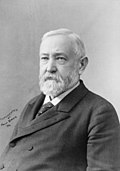 United States President (and former Brigadier-General) Benjamin Harrison
 -
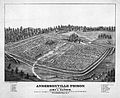 Andersonville Prison at Andersonville National Historic Site, by John L. Ransom
 -

-

-
-
 The burning of Columbia at Columbia, South Carolina in the American Civil War, by William Waud
 -
 Francis B. Spinola, Brigadier General for the Union in the American Civil War, and Congressman from New York
 -
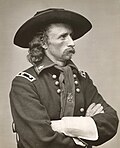 George Armstrong Custer, by George L. Andrews
 -
 Andersonville survivor
 -
 Military execution of the conspirators in the Abraham Lincoln assassination
 -

-
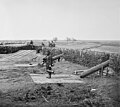 Quaker guns, by George Barnard and James F. Gibson
 -

-
-

-
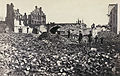 Richmond, Virginia after the American Civil War
 -
 The original sketch of Sherman in South Carolina: The burning of McPhersonville, at and by William Waud
 -

-

-
 Daniel McCallum, by the Brady National Photographic Art Gallery
 -

-

-
-

-

-
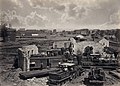 Atlanta roundhouse ruin at History of Atlanta, by George Barnard
 -
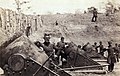 Siege of Yorktown, by James F. Gibson
 -

-

-
 Abraham Lincoln's private secretary and biographer John Hay
 -

-

-

-

-

-

-
 President Rutherford B. Hayes was the 19th President of the USA
 -
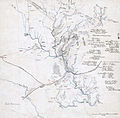
-
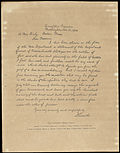 Lithographic facsimile of the Bixby letter, by Huber's Museum
 -
 Confederate casualties at Chancellorsville during the American Civil War, by the National Archives and Records Administration
 -
 Allan Pinkerton, President Lincoln, and John A. McClernand in 1862 by Alexander Gardner
 -
 The print version of Sherman in South Carolina: The burning of McPhersonville at McPhersonville, South Carolina, by William Waud
 -
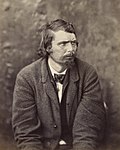
-

-

-
 The Chickahominy – Sumner's Upper Bridge at Peninsula campaign, by William McIlvaine


Did you know...
- ... that Edward L. Molineux seized goods worth $210 million in 2025 from the Confederacy during the American Civil War?
- ... that some Confederate bullets were sourced from a silver mine?
- ... that Edward W. Gantt was a Confederate soldier who defected to the Union during the American Civil War?
- ... that Benjamin Jackson was likely paid at least $300 to fight in the American Civil War as Lewis Saunders?
- ... that actor George Kunkel portrayed in blackface the character of Uncle Tom, using it at first to promote slavery during the American Civil War but later to attack it, after his views had changed?
- ... that Dethloff Willrodt fought for the Union army on the first day of the Battle of Gettysburg on July 1, 1863, having previously been a soldier in the Confederate army?
Subcategories
American Civil War topics

Related portals


Things you can do
- Attention needed
- ...to referencing and citation • ...to coverage and accuracy • ...to structure • ...to grammar • ...to supporting materials
- Popular pages
- Full list
- Cleanup needed
- The West Tennessee Raids
- Requested articles
- Benjamin D. Fearing • James B. Speers • Charles S. Steedman • Battle of Barton's Station • Lawrence P. Graham • Frederick S. Sturmbaugh • Mexico and the American Civil War • Savannah Campaign Confederate order of battle • Battle of Lafayette • Battle of Sunshine Church • Requested American Civil War Medal of Honor recipients • Battle of Tazewell • John T. Sprague
- Expansion needed
- Battle of Boonsborough • Battle of Guard Hill • Battle of Rice's Station • Battle of Simmon's Bluff • Battle of Summit Point • Charleston Arsenal • Edenton Bell Battery • First Battle of Dalton • Blackshear Prison • Edwin Forbes • Hiram B. Granbury • Henry Thomas Harrison • Louis Hébert (colonel) • Benjamin G. Humphreys • Hezekiah G. Spruill • Smith carbine • Edward C. Walthall • Confederate States Secretary of the Navy • Confederate States Secretary of the Treasury • David Henry Williams • Battle of Rome Cross Roads • Ironclad Board • United States Military Railroad • Kansas in the American Civil War • Rufus Daggett • Ebenezer Magoffin • Confederate Quartermaster-General's Department • First Corps, Army of Northern Virginia • Francis Laurens Vinton • Ambrose Dudley Mann • Patrick Neeson Lynch • Stone Fleet (add international reactions and diplomacy) • Other American Civil War battle stubs • Other American Civil War stubs
- Images needed
- Preston Pond, Jr. • Melancthon Smith
- Merging needed
- 1st Regiment New York Mounted Rifles and 7th Regiment New York Volunteer Cavalry
- Citations needed
- 4th Maine Battery • 33rd Ohio Infantry • 110th New York Volunteer Infantry • Battle of Hatcher's Run • Camp Dennison • Confederate colonies • CSS Resolute • Dakota War of 1862 • Florida in the American Civil War • Ethan A. Hitchcock (general) • Fort Harker (Alabama) • Gettysburg (1993 film) • Iowa in the American Civil War • Second Battle of Fort Sumter
- Translation needed
Associated Wikimedia
The following Wikimedia Foundation sister projects provide more on this subject:
-
 Commons
Free media repository -
 Wikidata
Free knowledge base -
 Wikiquote
Collection of quotations -
 Wikisource
Free-content library -
 Wikiversity
Free learning tools -
 Wikivoyage
Free travel guide -
 Wiktionary
Dictionary and thesaurus


-

-

-

-

-

-

-

-

-

-

-
 Random portal
 -


- Shortcuts to this page: Portal:ACW • P:ACW